No products in the cart.
Findholidays best travel agency in Chennai for tours, flights, hotels, visa, honeymoon trips and travel services

Recent Articles

Explore Egypt – The Land of Pharaohs, Pyramids & Timeless Mysteries

Step into Egypt — a living museum of ancient wonders and modern charm.

Introduction — More Than Stones: Egypt as Living Story

Egypt is not only a museum of monumental tombs and temples — it is a living poem. Street vendors in Cairo still chant prices like old traders, fishermen pull in nets where pharaonic boats may once have sailed, and the breeze off the Nile still smells of date palms and spice. For travellers who love depth — of history, of taste, of human stories — Egypt repays long attention with brightness and mystery.
Why Egypt Matters to Travellers

  • Beginnings of recorded history: Egypt’s written records, tomb inscriptions and temples shaped early civilization.
  • Living culture: Coptic churches and Islamic neighborhoods show continuity across millennia.
  • A landscape of contrasts: Desert silence, the life-giving Nile, bustling markets, and calm Mediterranean coasts.
  • Unique experiences: Dawn at the Pyramids, a sunset felucca on the Nile, whispering ruins in the Valley of the Kings.

Pyramids of Giza & the Silent Sphinx

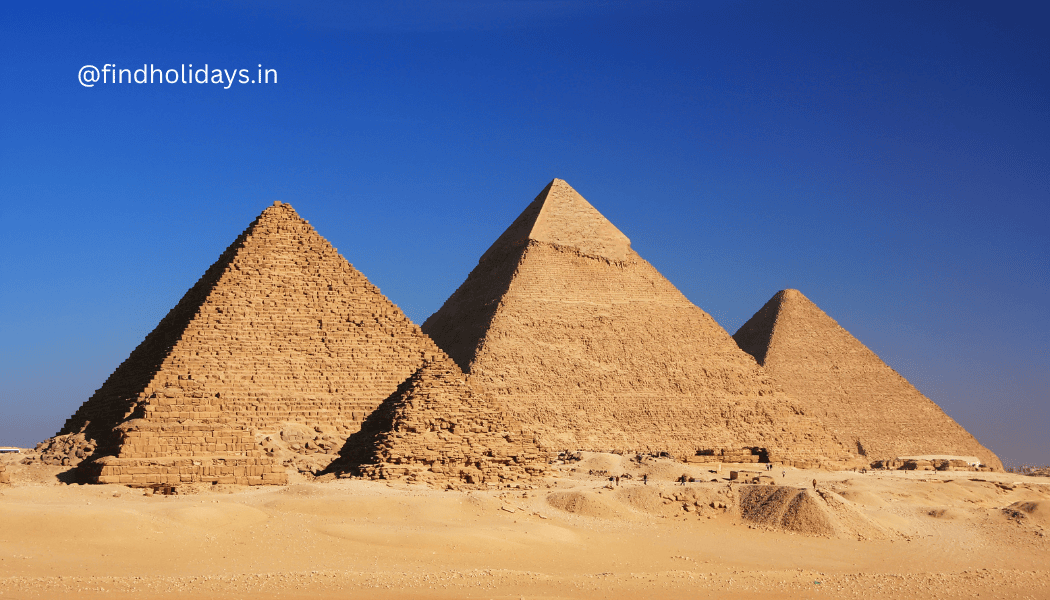
To stand before the Great Pyramid is to measure one’s smallness alongside human audacity. Built as tombs for pharaohs who believed in life after death, the pyramids align with stars and were filled with treasures and spells intended to guide kings beyond the horizon. The nearby Sphinx — half-man, half-lion — watches the desert with an inscrutable expression that has inspired poets and explorers for centuries.

Story to remember: In 1799, a small stone revealed by French soldiers near Rosetta was the key for Jean-François Champollion to crack ancient Egyptian script — the Rosetta Stone unlocked a lost language and a civilisation’s voice.

The Nile — Egypt’s Lifeline

The Nile is both river and memory. For tens of thousands of years it has supported settlements, irrigated flax and barley, and carried traders and ideas. A slow cruise from Luxor to Aswan is a gentle way to watch life move — farmers bent at fields, children waving at passing boats, and temples rising like promises along the banks.

Moment to cherish: Take a felucca at dusk. The sky deepens, the river cools, and the modern world falls away to a simple horizon and the sound of oars.

Luxor & Karnak — An Open-Air Book of Kings

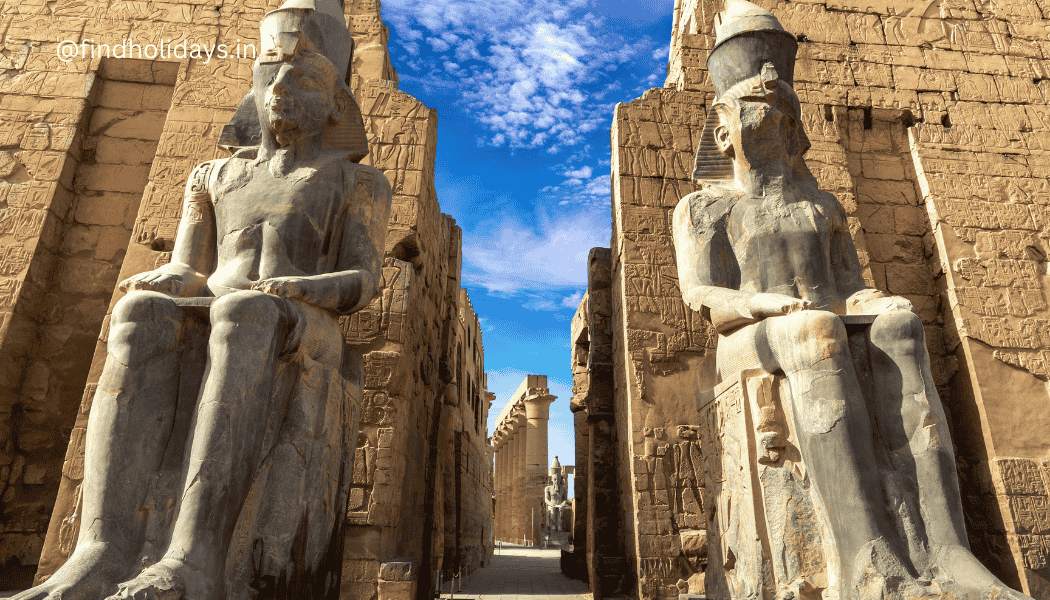
Luxor, often called the world’s greatest open-air museum, holds the temples and tombs of a nation that recorded its life in stone. The Karnak complex, with its forest of columns, once echoed with the step of pharaohs and priestly chants. Nearby, the Valley of the Kings hides painted tombs — the most famous modern discovery being Tutankhamun’s intact burial chest, found by Howard Carter in 1922.

Visitor tip: Visit Karnak at sunrise to feel the space before crowds arrive; the light transforms the columns into living forms.

Abu Simbel — Relocated Monuments & Ramesses’ Pride

Abu Simbel’s colossal statues of Ramesses II were famously cut from their mountainside and moved, block by block, when the Aswan High Dam threatened to flood them. The relocation — an engineering triumph of the 1960s — preserved these hulking witnesses to a pharaoh’s grandeur and remains one of modern conservation’s most dramatic tales.

Alexandria — Hellenic Echoes on the Mediterranean

Founded by Alexander the Great, Alexandria became a hub of ancient learning — the Library of Alexandria (and the lighthouse, one of the Seven Wonders) made the city a beacon of knowledge. Today’s Alexandria is a layered city: Ottoman facades, modern corniches, and small cafes where people speak of poets and sea breezes in the same breath.

Hidden pleasure: Seek out the Bibliotheca Alexandrina and its exhibitions — a modern attempt to honour a lost ancient glory.

Coptic & Islamic Cairo — Two Sacred Faces

Cairo holds churches and mosques like beads on a string. Coptic Cairo shelters Christian history through narrow lanes, ancient churches and the Hanging Church. In Islamic Cairo, the labyrinth of Khan el-Khalili market hums with spice and copper, while minarets puncture the skyline — each quarter a living chapter of Egypt’s spiritual life.

Local note: Wander slowly through the Khan at early morning or late afternoon, sip mint tea, and listen to the chant of the city — it is a sensory education.

Siwa Oasis — The Desert’s Secret Garden

Far from the Nile’s bustle, Siwa Oasis sits like a dream of palms and salt lakes. Siwa’s language and culture are distinct; the oracle of Amun once made the site famous. Visit mudbrick ksars, bathe in natural springs, and taste the sweet dates that define local hospitality.

Why go: For silence, stargazing, and a deep sense of place that feels untouched by time.

Offbeat Egypt & New Discoveries

Egypt continues to surprise archaeologists. Recent digs have uncovered worker villages, painted coffins, and previously unknown tombs that rewrite parts of pharaonic life. Off-the-beaten-path locations — such as the Faiyum’s lake-side ruins or the colorful rock art in the Eastern Desert — reward curious travellers with intimacy and wonder.

Pro tip: Ask your guide about recent excavations — local archaeologists love to tell the story of new finds.

Food & Everyday Culture — A Plateful of Stories

Egyptian food is generous, hearty and perfect for sharing. Try koshari (a national street food of rice, lentils, pasta and spicy sauce), ful medames for breakfast, or a slow-grilled shawarma wrap in a midnight market. Tea is the social glue; bread is life. Conversation here often begins and ends at the table.

Stories & Myths — Osiris, Isis & the Heart of the Afterlife

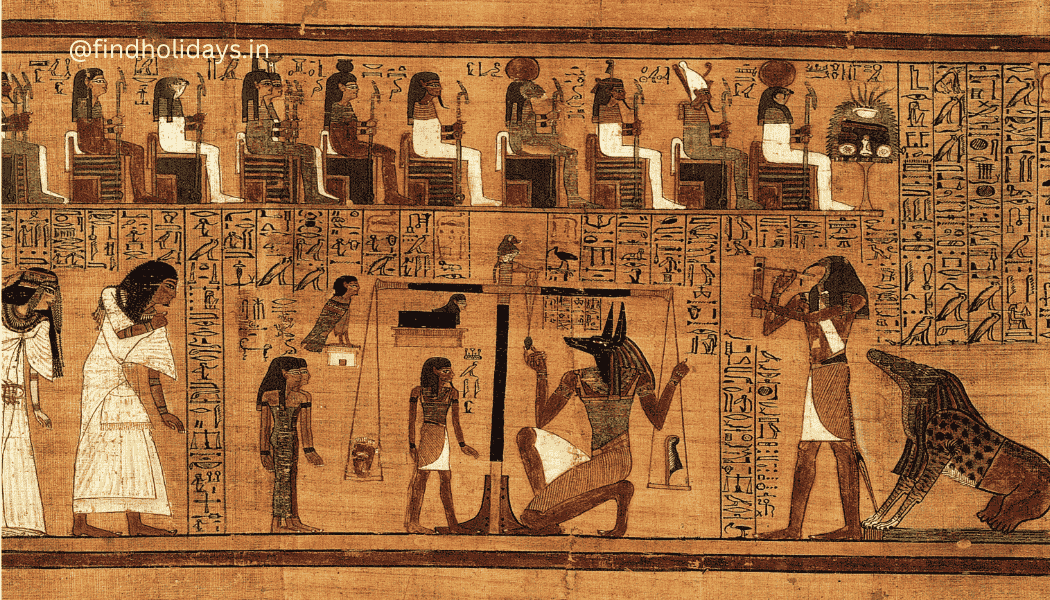
Egyptian mythology shaped how people thought about death and renewal. The story of Osiris, murdered and resurrected by Isis, reflects beliefs about judgement and rebirth. Tomb texts — spells and poems — were written to guide the soul through the afterlife. These myths are not only ancient curiosities; they informed how pyramids were built, how kings ruled, and how everyday people spoke of destiny.

Practical Travel Notes

  • Best time to visit: October–April (milder days and calm evenings).
  • Visas: Visa rules vary — many nationalities require a pre-arranged visa, some can obtain visa on arrival; we provide visa assistance from Chennai.
  • Health & safety: Drink bottled water, use sunscreen, and respect local dress codes at religious sites.
  • Money: Egyptian Pound (EGP). Cash remains useful in markets; cards work in larger hotels.

Sample 8-Day Itinerary (Classic Egypt)

Day 1 — Cairo

Arrival, Egyptian Museum visit and evening at Khan el-Khalili.

Day 2 — Giza

Pyramids, Sphinx, and Solar Boat Museum.

Day 3 — Alexandria

Library, Mediterranean corniche and Roman sites.

Day 4–6 — Nile Cruise (Luxor to Aswan)

Karnak, Valley of the Kings, Edfu, Kom Ombo and relaxed river life.

Day 7 — Abu Simbel

Optional early-morning flight or drive; stunning temples.

Day 8 — Cairo & Departure

Last-minute shopping, relax and transfer to airport.

Why Book Egypt with FindHolidays.in

We design journeys from Chennai that meet your rhythm: deep cultural immersion, comfortable travel, and trustworthy local guides. We provide visa assistance, local transport, hand-picked hotels, and tailored experiences — whether you want archaeological depth, luxury comfort or a family-friendly adventure.

From paperwork to private temple tours — we take care of the details so your trip becomes the story you want to tell.

Plan Your Egypt Adventure with FindHolidays.in

From Chennai to Cairo and beyond — expert planning, visa assistance, and local guides who know the stories behind every stone.

Call / WhatsApp
+91 99425 49191

    Plan Your Dream Vacation

    © FindHolidays.in — A Unit of Find Money and Holiday Services Pvt. Ltd. • Based in Chennai, Tamil Nadu

    Leave A Comment

    Your email address will not be published. Required fields are marked *

    Relatetd Post