

No products in the cart.








FindHolidays Spain Travel Guide · Architecture & History
140 Years in the Making: The Unfinished Dream of Sagrada Família
A comprehensive guide to Barcelona’s crowning jewel, Antoni Gaudí’s masterpiece, its turbulent history of fire and war, and the monumental 2026 completion milestones.
How does a building remain under construction for over 140 years? From shattered blueprints to aerospace-grade adhesives, discover the epic journey of the world’s most famous construction site.
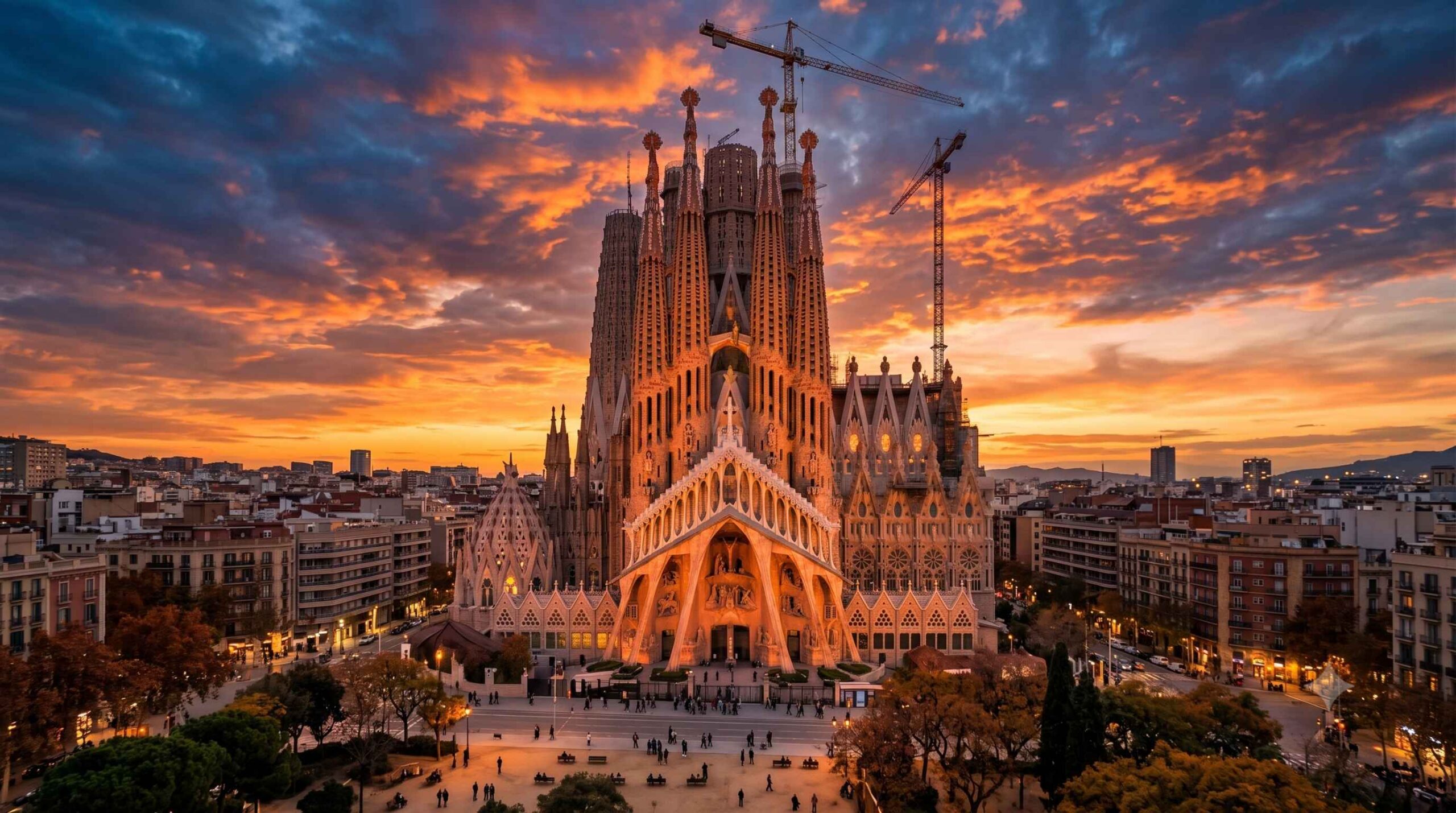
Standing in the heart of Barcelona, the Basílica de la Sagrada Família is an architectural paradox. It is the most visited monument in Spain, a designated UNESCO World Heritage site, and yet, it is still an active construction zone. To look at its towering spires is to look at a dream that has survived the death of its creator, the devastation of civil war, and more than a century of technological evolution.
This FindHolidays guide dives deep into the turbulent, fascinating history of Antoni Gaudí’s masterpiece. We will explore why it has taken over 140 years to build, what the monumental 2026 updates actually mean for visitors, and how to seamlessly fit this wonder into your broader Spain travel itinerary.
The Accidental Masterpiece: How It Began
It is a little-known fact that Antoni Gaudí was not the original architect of the Sagrada Família. The project actually began in 1882 under architect Francisco de Paula del Villar, who envisioned a standard Gothic revival church. However, after fundamental disagreements with the promoters, Villar resigned.
In 1883, a young Antoni Gaudí took over the project. He dramatically discarded the old blueprints and transformed the concept into an unprecedented blend of Gothic and curvilinear Art Nouveau forms. Gaudí dedicated the rest of his life to the basilica. When he tragically died in 1926 after being struck by a tram, less than a quarter of the building was estimated to be complete.
“My client is not in a hurry.” — Antoni Gaudí, referring to God, when asked about the incredibly slow pace of construction.
Fire, War, and Lost Blueprints
If building a colossal stone basilica wasn’t hard enough, history intervened violently. During the Spanish Civil War (1936–1939), anarchist militias broke into the basilica and set fire to Gaudí’s workshop.
Original drawings, detailed design plans, and fragile plaster models were smashed and burned. For years, it seemed Gaudí’s vision was lost forever. After the war ended, successive generations of architects had to painstakingly reconstruct his designs using surviving photographs, fragmented sketches, and shattered model pieces to remain faithful to his original genius.
The Three Faces of the Basilica
The Sagrada Família is designed to be a “Bible in stone,” telling the complete Christian story through its three primary façades.
The Nativity Façade
The Vision: Designed primarily by Gaudí himself before his death.
Facing the rising sun, this façade celebrates the birth of Christ. It is incredibly organic, highly decorated, and dripping with natural motifs—so significant that it was designated a UNESCO World Heritage site in 2005.
The Passion Façade
The Vision: Designed by sculptor Josep Maria Subirachs.
Facing the setting sun, this side represents the crucifixion. In stark contrast to the Nativity side, it features a skeletal, angular, and harsh design symbolizing pain and suffering.
The Glory Façade (Ongoing)
The Vision: The future grand entrance to the basilica.
Still under construction, this will be the most monumental façade. However, executing Gaudí’s vision requires a massive grand plaza that conflicts with modern Barcelona’s dense urban layout.
The Tower of Jesus Christ
The Vision: The crown jewel of the entire structure.
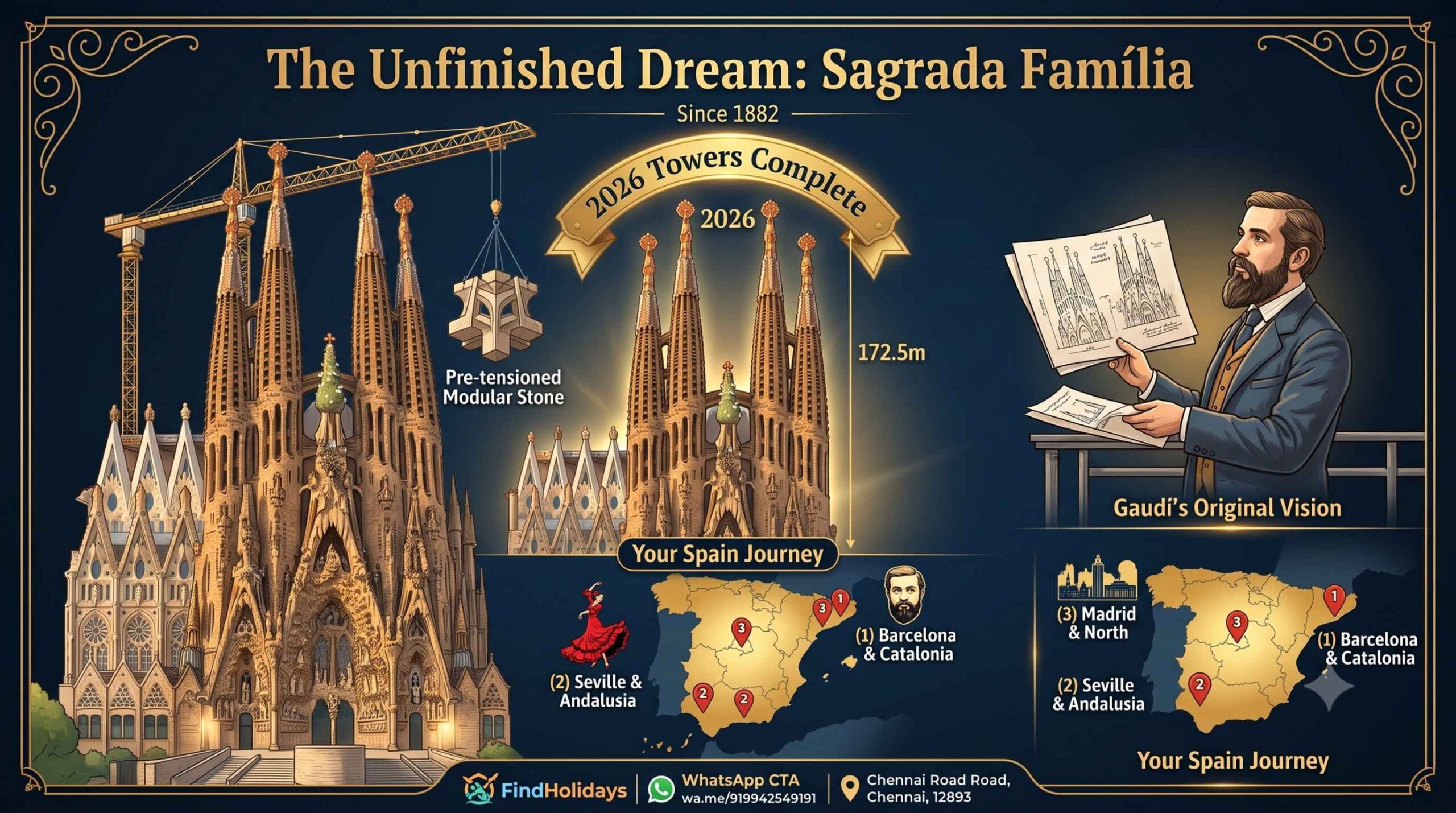
Scheduled for completion in 2026, this central spire reaches 172.5 meters. It makes the Sagrada Família the tallest church in the world, deliberately designed to be exactly one meter lower than Barcelona’s Montjuïc mountain to respect God’s creation.
The 2026 Milestone: Modern Tech Meets Ancient Stone
For decades, progress was painstakingly slow, relying heavily on private donations and traditional techniques. So, how did they suddenly accelerate to finish the central towers by the 2026 Gaudí centenary?
The answer lies in cutting-edge engineering. The team shifted to a modular construction approach using pre-tensioned, prefabricated stone panels. Partnering with engineering firm Arup and materials giant Henkel, they utilized advanced epoxy adhesives (like LOCTITE EA 9497) to bond stone and steel together. This allowed massive tower sections to be preassembled at a quarry, transported to the site, and stacked like architectural building blocks.
This method allowed construction to progress up to ten times faster than traditional methods, accomplishing in 8 years what would normally take 50 to 60 years.
Beyond Barcelona: Top Spain Tour Spots
While the Sagrada Família (which drew a record 4,833,658 visitors in 2024) is a masterpiece, a trip to Spain should explore the country’s diverse regional cultures. Here is how Barcelona compares to other iconic Spanish destinations.
| Destination | Region | Vibe & Highlights | Suggested Stay |
|---|---|---|---|
| Barcelona | Catalonia | Gaudí architecture, Mediterranean beaches, Gothic Quarter, vibrant tapas culture. | 3 to 4 nights |
| Madrid | Central Spain | Royal history, Prado Museum, Retiro Park, elegant boulevards, late-night dining. | 3 nights |
| Seville | Andalusia | Flamenco, Moorish Alcázar, massive Gothic cathedral, orange-tree-lined streets. | 2 to 3 nights |
| Granada | Andalusia | The breathtaking Alhambra palace, Sierra Nevada mountains, free tapas culture. | 1 to 2 nights |
| San Sebastián | Basque Country | World-class gastronomy, Michelin-star dining, picturesque La Concha beach. | 2 nights |
The FindHolidays S.P.A.I.N. Planning Compass
Planning a multi-city Spanish holiday from India requires smart logistics. Use this framework to build a seamless itinerary.
Schengen Visa
Indian travellers require a short-stay Schengen visa. Apply well in advance through VFS Global, ensuring your main destination matches your application.
Pre-Booking
Major sites like the Sagrada Família and the Alhambra operate on strict timed-entry tickets. Showing up on the day guarantees you will be turned away.
Pace of Art
Do not schedule three major museums in one day. Balance heavy architectural visits with relaxed plaza time and long lunches.
Internal Transit
Spain’s AVE high-speed train network is incredible. It is often faster and less stressful to take the train between Madrid, Barcelona, and Seville than to fly.
Neighborhoods
Location is everything. Staying in the Eixample district in Barcelona or Barrio de Santa Cruz in Seville dramatically improves your walking experience.
Four Spain Holiday Styles
Spain is too vast to see in one week. We recommend choosing a specific route style based on your travel interests.
1. The Classic Trio
Madrid, Seville, and Barcelona. The perfect 9-day introduction blending royal history, Andalusian romance, and Gaudí’s modernist wonders.
2. Andalusian Romance
Seville, Córdoba, Granada, and Málaga. Focus deeply on southern Spain’s Moorish palaces, flamenco rhythms, and sun-drenched coastlines.
3. The Gaudí Trail
A deep dive into Catalonia. Spend extensive time in Barcelona exploring the Sagrada Família, Park Güell, Casa Batlló, and add a day trip to Montserrat.
4. Northern Gastronomy
Madrid to Basque Country. Designed for food lovers, focusing on San Sebastián’s pintxos culture and the Guggenheim Museum in Bilbao.
The Sagrada Família Visitor Timeline
Make the most of your visit to the basilica with this step-by-step approach.
Step 1
Book Weeks Ahead
Secure your timed-entry tickets online directly through the official website. Decide if you want standard entry, or a ticket that includes tower access.
Step 2
Arrive for the Exterior
Arrive 30 minutes before your slot. Walk around the entire perimeter to compare the organic Nativity Façade with the stark Passion Façade.
Step 3
The Forest Interior
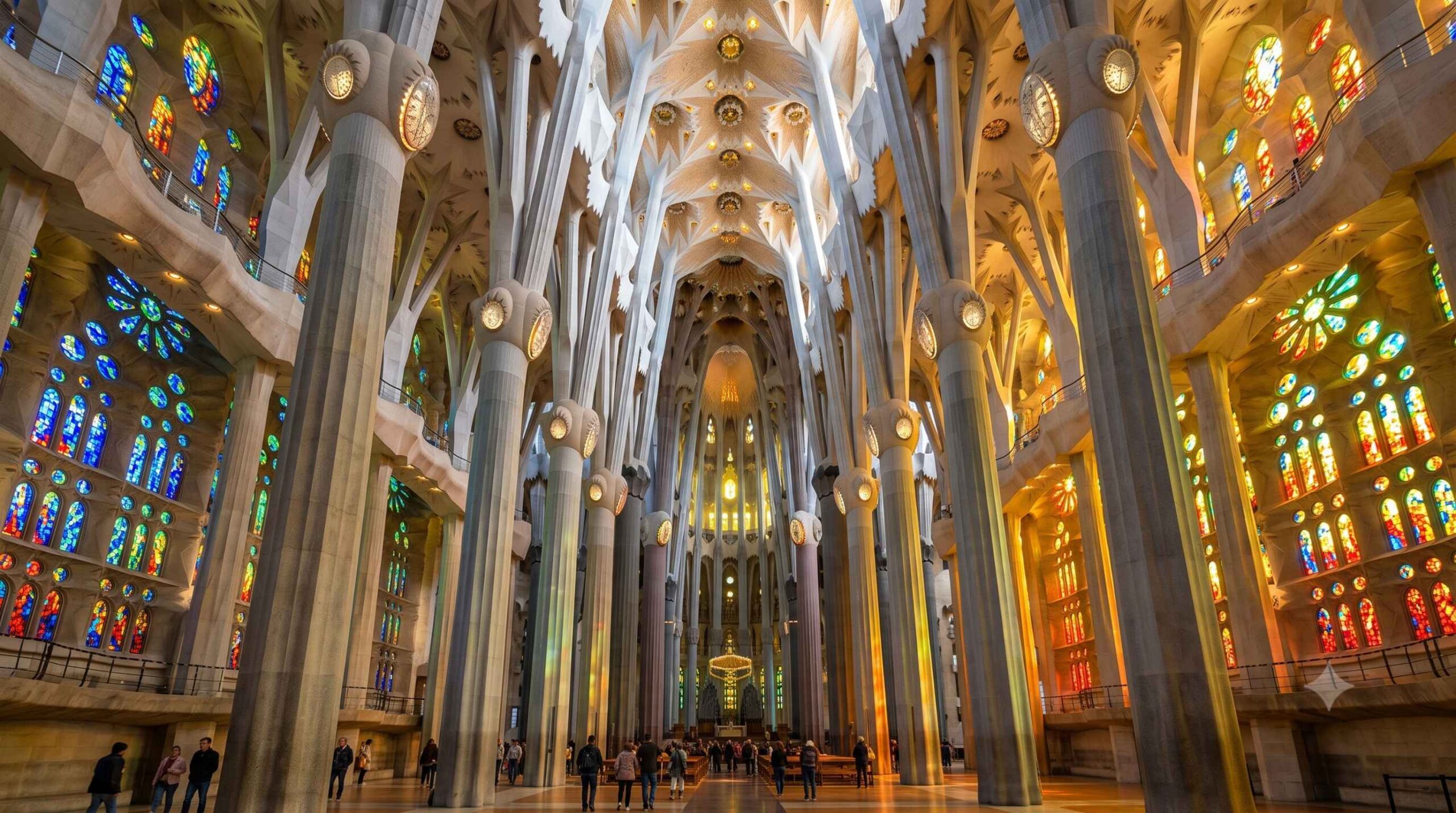
Pass through security. Inside, look up. Gaudí designed the columns to look like towering trees reaching a geometric canopy bathed in stained-glass light.
Step 4
The Crypt & Museum
Do not miss the underground museum. It displays the fascinating weighted string models Gaudí used to calculate the complex structural loads without computers.
Common Spain Travel Mistakes to Avoid
1. Ignoring the Dress Code
The Sagrada Família is an active Catholic basilica. Shoulders must be covered, and shorts/skirts must reach mid-thigh. Security will deny entry to inappropriate attire.
2. Eating on Las Ramblas
Avoid the main tourist strips for meals. Walk just 10 minutes into the Gràcia or El Born neighborhoods to find authentic, reasonably priced tapas.
3. Packing a Rigid Schedule
Spanish culture thrives on a relaxed schedule. Lunch happens around 2:00 PM, and dinner rarely starts before 8:30 PM. Adapt to the local rhythm.
4. Renting a Car for Cities
Driving in Madrid or Barcelona is stressful, and parking is expensive. Rely on the excellent metro systems and high-speed intercity trains instead.
Plan Your Trip with Reliable Information
This blog is an educational travel-planning guide. Attraction access, construction updates, local taxes, and train timings can change. Before booking, verify current destination information through the official Sagrada Família website.
Indian passport holders must apply for a Schengen visa. Always check the current requirements, appointment availability, and processing times through the VFS Global Spain application page for India.
Frequently Asked Questions
Why has the Sagrada Família taken so long to build?
The extreme duration is due to several factors: its unprecedented structural complexity, total reliance on private donations (no government or church funding), the destruction of original plans during the Spanish Civil War, and temporary halts during the COVID-19 pandemic.
Is the Sagrada Família completely finished in 2026?
No. While 2026 marks the historic completion of the central towers (including the Tower of Jesus Christ), the final Glory Façade and the grand entrance plaza require complex urban planning and potential property demolitions. Total completion is estimated around 2034 or 2035.
Which Sagrada Família tower should I visit?
You can access the towers on the Nativity Façade (Gaudí’s original design, offering views of eastern Barcelona) or the Passion Façade (offering views of the city center). Both require taking an elevator up and walking down a narrow spiral staircase.
Do Indian citizens need a visa for Spain?
Yes, Indian passport holders require a short-stay Schengen visa to enter Spain. It is highly recommended to book your VFS Global appointment well in advance, especially before the peak European summer season.
How many days do I need in Barcelona?
A minimum of 3 to 4 days is recommended. This allows enough time to properly visit the Sagrada Família, Park Güell, the Gothic Quarter, enjoy the beaches, and take a potential day trip to Montserrat without feeling exhausted.
Ready to Experience Spain?
From the architectural wonders of Barcelona to the flamenco rhythms of Seville and the royal elegance of Madrid, Spain is unforgettable. Share your travel dates, preferred cities, and trip style, and our Chennai team will build a seamless itinerary.
FindHolidays · Anna Nagar, Chennai, Tamil Nadu · info@findholidays.in · +91 99425 49191